China’s Zero Tariff Regime and the Reconfiguration of Africa’s Global Trade Partnerships
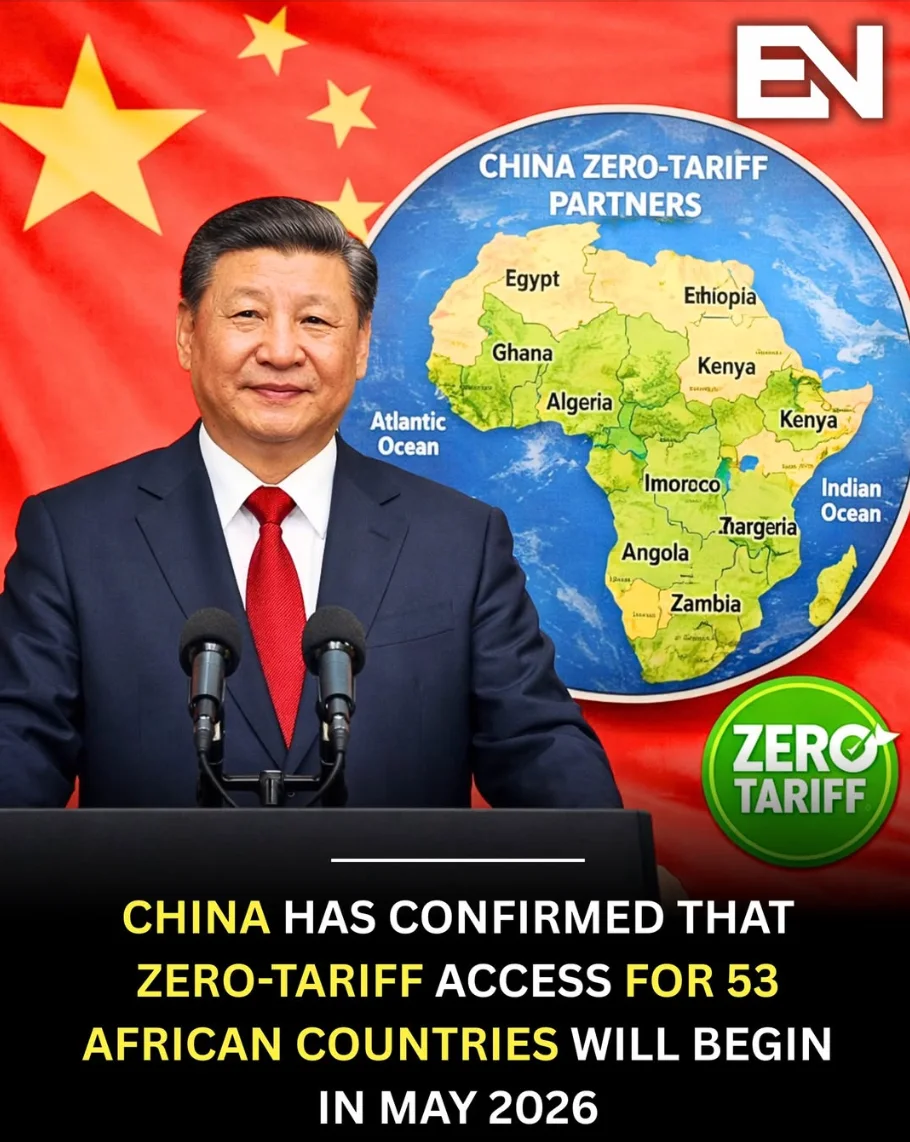
On 14 February, Xi Jinping announced in his congratulatory message to the 39th African Union Summit that China will, effective 1 May 2026, extend comprehensive zero tariff treatment to the 53 African countries that maintain diplomatic relations with Beijing, with the exception of Eswatini. The announcement also reaffirmed China’s intention to advance negotiations on the Agreement on Economic Partnership for Shared Development. This measure constitutes a significant step in China’s evolving trade and development engagement with the African continent and signals a deepening of institutionalized economic cooperation.
The 2026 extension builds upon an earlier policy initiative unveiled in June, 2025 during the China Africa Trade and Economic Cooperation Forum held in Changsha. At that forum, China introduced a zero tariff regime granting duty free access to imports from 53 African states. The initiative removed tariffs on nearly all categories of goods, including agricultural produce, minerals, textiles, and manufactured products. The forthcoming expansion consolidates and formalizes this framework, transforming it from a policy gesture into a comprehensive trade arrangement.
Zero tariff treatment functions as a concrete institutional mechanism designed to facilitate the entry of high quality African products into the Chinese market. By eliminating customs duties, the policy lowers transaction costs and reduces price distortions that would otherwise disadvantage exporters. Tariffs, as instruments of global economic governance, are taxes imposed on imported goods to protect domestic industries and generate fiscal revenue. While they may serve developmental or strategic objectives for importing states, they also raise the final price of foreign goods and limit market access for exporting countries. The removal of such duties therefore directly enhances export competitiveness.
For African economies, the anticipated gains are substantial. China’s market of more than 1.4 billion consumers presents a scale of demand that few global markets can match. The elimination of tariffs reduces entry barriers, strengthens price competitiveness, and improves the predictability of market access. African enterprises are likely to secure increased orders and more stable long term trade relationships. In sectors such as agriculture, where margins are often narrow, full tariff relief is particularly consequential. Exports of coffee, tea, avocados, and other agricultural commodities stand to benefit from lower landed costs in China, potentially stimulating higher export volumes and diversification beyond traditional raw material exports.
The timing of this initiative is notable in light of developments surrounding the African Growth and Opportunity Act. Enacted in 2000 for an initial fifteen year period and extended in 2015 after contentious debate, AGOA has long provided eligible African countries with duty free access to the United States market. However, the prospect of a limited one year extension under the administration of Donald Trump introduces renewed uncertainty. Short term and selective extensions risk creating cyclical instability in trade relations. Manufacturers may be reluctant to expand production capacity if preferential access can lapse within months. Similarly, governments may hesitate to anchor industrial strategies to a trade regime that lacks long term security. Predictability is a critical factor in shaping investment decisions, and uncertainty can dampen both domestic and foreign direct investment.
Against this backdrop, China’s zero tariff regime may be interpreted as an effort to project reliability and strategic continuity. Its approach aligns with continental integration frameworks such as the African Continental Free Trade Area and the developmental aspirations articulated in Agenda 2063. By facilitating expanded exports and encouraging value addition, the policy complements Africa’s broader objective of structural transformation and intra continental trade integration.
In geopolitical terms, the initiative reinforces China’s economic diplomacy within the Global South. By embedding zero tariff access within a broader partnership narrative, Beijing positions itself as a long term trade partner committed to Africa’s development trajectory. Whether the policy will translate into sustained industrial growth and diversification across African economies will depend on complementary domestic reforms, infrastructure capacity, and regulatory coherence. Nevertheless, the extension of comprehensive zero tariff treatment represents a significant recalibration of China Africa trade relations and an important development in the evolving architecture of South South economic cooperation.